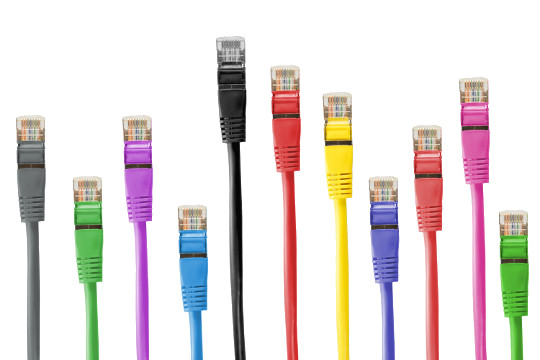
Whether you are moving into a new office, remodeling, or installing new equipment, you should be asking yourself whether your workstations and network should be wired or wireless. The general rule of thumb: if you need mobility, or you simply can't run a wire to the device, go wireless. For everything else, consider wired.
Why Wired is Better for Stationary Devices
Wired networks are faster, more reliable, and more secure than wireless. A physical cable isn't subject to interference from neighboring networks, and access requires someone to physically plug in at your location — making unauthorized access significantly harder.
The one downside is installation: running cable through ceilings and walls takes some planning and may temporarily disrupt your space. But it's a one-time investment that pays dividends for years.
When Wireless Makes Sense
Wireless is the right choice for mobile devices (phones, tablets, laptops that move around), guest networks, or areas where running cable is impractical. The important caveat: wireless networks are susceptible to interference from nearby networks, and the signal extends beyond your walls — which creates a potential security exposure if not properly configured.
Most well-designed offices use a combination: wired connections for desktop workstations, servers, and printers; wireless for mobile devices and common areas.
If you want an expert assessment of your specific setup, give us a call.